
The 12 Houses of Astrology: The Journey From “I Am Here” to “I Let Go”

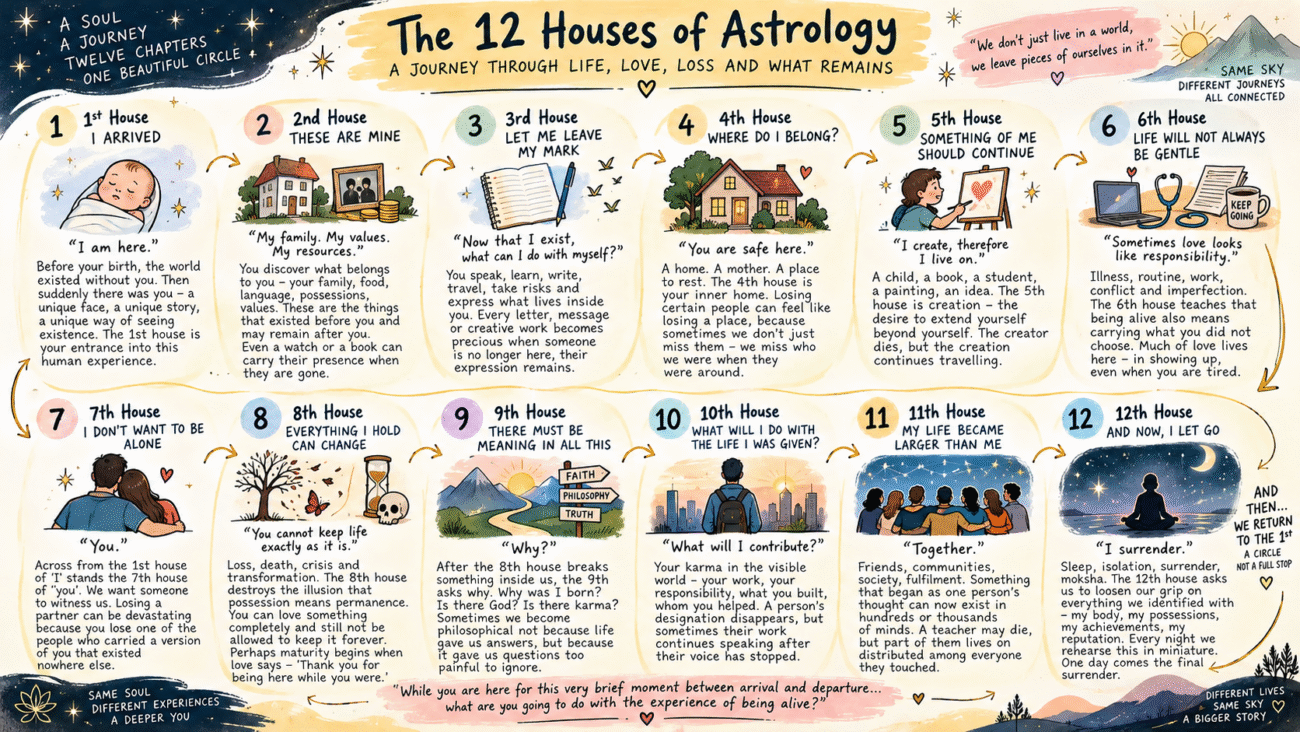
Most people are introduced to the twelve houses of astrology as twelve different areas of life. The first house represents the self, th...
Ketu is the headless body of the Navagraha myth — detachment and inherited skill that can be genuine liberation, or numbness mistaken for wisdom, depending on whether the loss underneath was ever actually felt.
Moon explored as a psychological archetype: emotional receptivity versus fixation, the mother as the template for felt safety, and classical karakatva with Sanskrit slokas.
The Sun isn’t ego or vanity — it’s the part of you that knows who you are independent of anyone’s approval, and a weak Sun swings between craving validation and dimming its own light to avoid being doubted.
Saturn explored as a psychological archetype: the shadow-child origin story behind its exactitude, delay versus punishment, discipline as self-respect, and classical karakatva with Sanskrit slokas.
Jupiter explored as a psychological archetype: the difference between tested faith and untested certainty, generosity that tips into condescension, and classical karakatva with Sanskrit slokas.
No account yet?
Create an Account